How to translate product listings for other countries (and why not word for word)
A word-for-word translation keeps your meaning and loses your buyers. How to write listings for another country: local search words, units, sizes and tone.
Ashish · 5 min read
A UK seller translates their best-selling listing into German. The translation is perfect. Every word correct, every sentence grammatical.
It gets no sales in Germany.
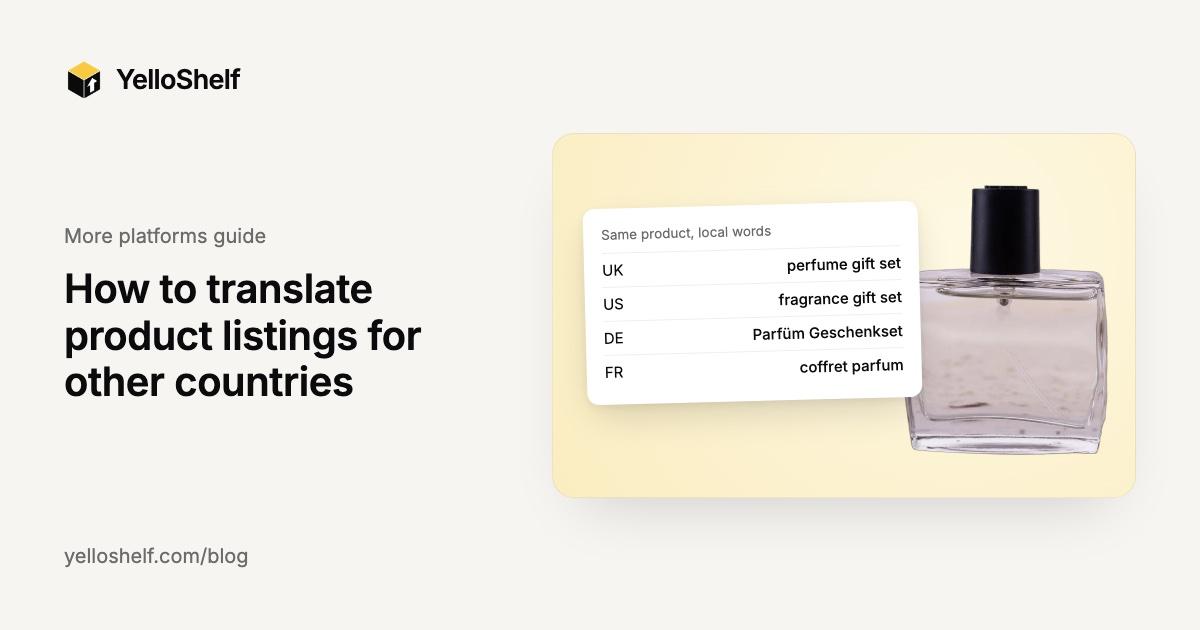
The reason is simple and a bit cruel: the translation said exactly what the English said. But German buyers don't search for a translation of your English keywords. They search for the words they use. Those are often different, and no translation tool will tell you which ones they are.
A listing for another country isn't a translation. It's a new listing, written for different buyers. Here's how.
Why word for word doesn't work
Three things go wrong when you translate a listing directly:
- 1The search words are wrong. Even in English, a "jumper" in the UK is a "sweater" in the US, and "trainers" are "sneakers". Across languages it's worse: the literal translation of your keyword may be a phrase nobody types.
- 2The details don't fit. Inches in a country that uses centimetres. A US ring size for a European buyer. A delivery promise that only applies at home.
- 3The tone is off. Selling points that land in one country can feel pushy or flat in another.
Step 1: research search words in that country
Start the keyword research again, in the new country. Don't start from your English list.
- The marketplace search bar. On Amazon.de or Etsy in German, type the item in the buyer's language and note the suggestions.
- Top listings in that country. Which words do the best sellers there lead with?
- Your own Stats. On Etsy, your Stats may show search terms from buyers abroad. Those are real local words.
If you don't speak the language, ask someone who does to read your shortlist. A native speaker spots a wrong word instantly.
Step 2: adapt the details, not just the words
- Units. Centimetres and grams for most countries, inches and ounces for the US. Give both if you sell to both.
- Sizes. Clothing, shoe and ring sizes differ by country. Use a size chart with the local system.
- Spelling. Colour or color, personalised or personalized. Use your buyer's.
- Delivery. State where the item ships from and how long it takes to reach that country.
- Currency and price. Marketplaces convert prices, but check that the converted price looks sensible locally.
Step 3: rewrite the title, tags and description
With local words and details in hand, write each part fresh:
- Title: the local main phrase first, then the key details, inside the marketplace's limit.
- Tags or search terms: local synonyms and phrases. For Amazon backend terms, remember accented letters can take more than one byte, which matters near the 250-byte limit.
- Description: answer the same questions, in the buyer's units, in natural sentences.
Platform notes
Etsy. Add the language in Shop Manager under Settings, then Languages and translations. Each listing gets a Translations section for the title, description and tags. Etsy's Seller Handbook recommends writing your own translations where you can, because you choose the translated keywords, and your own translations replace Etsy's automatic ones (Etsy Help: translate your shop).
Amazon. Each country is its own marketplace with its own listing. Research and write each one for its buyers, and check the category rules in that marketplace, which can differ.
eBay. If you offer international shipping, buyers in other countries can find your listings. If you list on a local eBay site, write the title in that site's language and fill item specifics in its terms.
Your own store. Use your platform's language settings so each language has its own page, title and meta description, rather than a translation widget over one page.
A quick test before you publish
Ask one native speaker to read the listing as a shopper and answer three questions:
- 1Would you search for these words?
- 2Is anything strange or unclear?
- 3Would you trust this seller?
If you can't find a reader, at least run your translation back into English and look for anything that changed meaning.
Writing natively without speaking the language
Most small sellers don't speak five languages. That's the gap we built for.
In Product listings, you pick the country you sell to and the language separately. We research what buyers search in that country, show you the keywords with their monthly searches, and write the listing for buyers there: their words, their units, their way of saying things. Not a word-for-word translation of your English. We still only use facts from your photos and answers.
You can add another marketplace to the same product without starting over. Check the result with a native speaker if you can, the same as you would any translation.
Quick checklist
- Keywords researched in the new country, not translated.
- Units, sizes and spelling switched to the buyer's.
- Delivery time to that country stated.
- Title, tags and description written fresh.
- Etsy translations added per listing, if you sell on Etsy.
- One native speaker read it, if possible.
Your first Product listing or Listing review is free. After that, credit packs start at $10, with no subscription.
Made by the team behind YelloShelf
Write listings for buyers in another country
Pick the country you sell to and the language. We research what buyers search there and write the listing natively, not as a word-for-word translation.
- Your first listing or review is free
- Pay as you go credit packs from $10
- No subscription
- 7-day money-back guarantee on your first purchase
FAQ
Should I use machine translation for my listings?
It's a fair starting point, but check it. Machine translation keeps the meaning of your words, not the words buyers in that country search. Etsy's own Seller Handbook recommends writing your own translations where you can, because you choose the translated keywords.
How do I add translations to Etsy listings?
Add the language in Shop Manager under Settings, then Languages and translations. Each listing then has a Translations section where you can add a translated title, description and tags. Your own translations replace Etsy's automatic ones.
Do I need different keywords for each country?
Usually, yes. Buyers in different countries use different words for the same thing, even in the same language: jumper and sweater, trainers and sneakers. Research search words in each country rather than translating your English keywords.
What else changes besides the language?
Units, sizes, spelling, currency, delivery times and what counts as a strong selling point. Give measurements in the units buyers use, convert clothing and ring sizes, and say clearly where the item ships from.